
Why the Q?
A most deliberate little eccentricity.
Mahjong emerged in China during the Qing dynasty, before travelling across oceans, generations and drawing rooms to become the game we know and adore today.
So when we formed the Royal Apothic Imperial Mahjong Leaque, we gave the traditional League a small twist: Q for Qing — a quiet nod to the Chinese chapter where the story of mahjong began.
Consider it our house spelling.

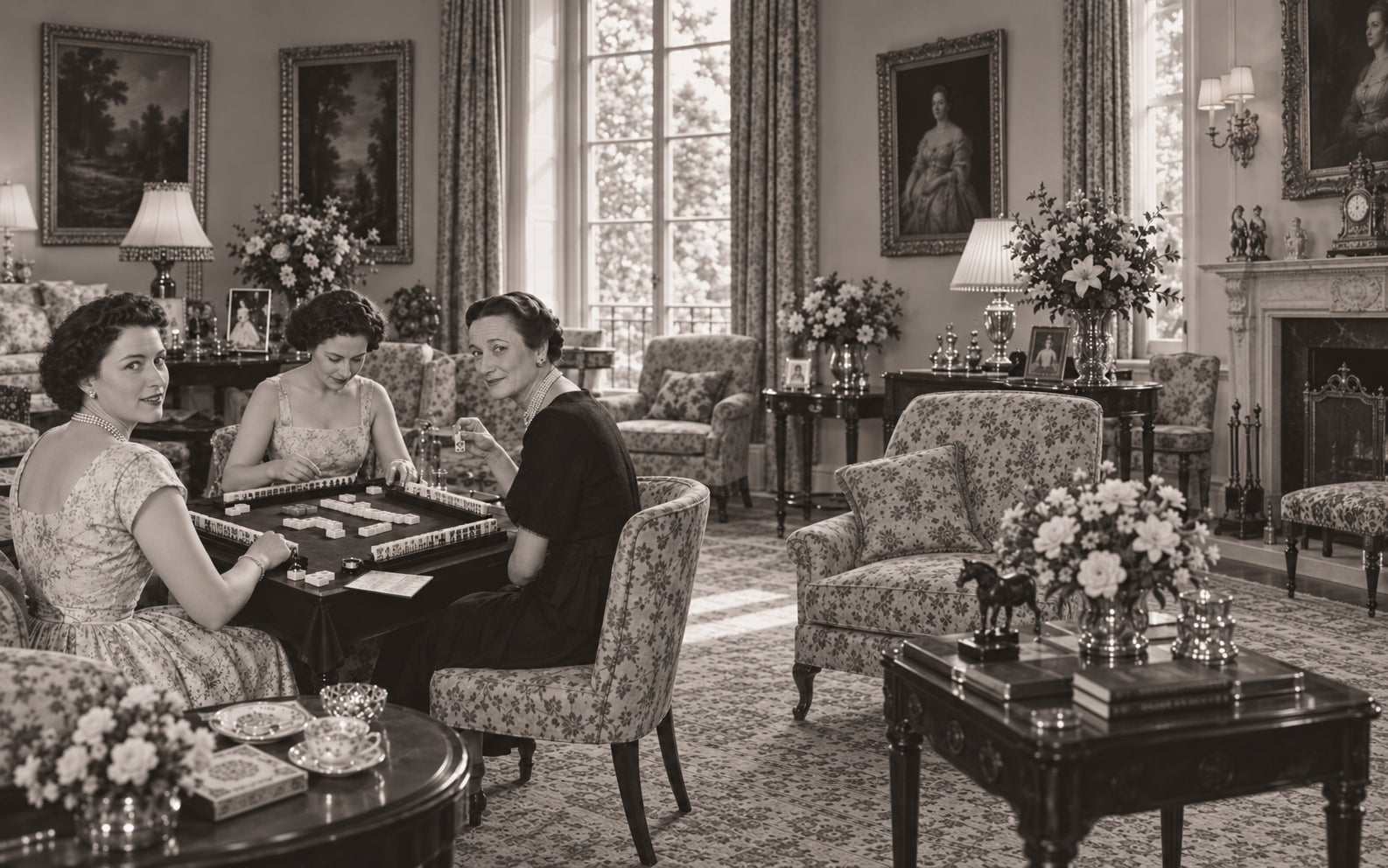
From China to the American Table
Mahjong has been causing perfectly respectable people to become wildly competitive for quite some time.
The game began in 19th-century China, eventually making its way across the Pacific and onto American tables in the early 20th century. By the roaring 1920s, America was positively mad for mahjong. Sets were imported by the thousands, mahjong parties became the invitation to receive, and the unmistakable clatter of tiles could be heard in fashionable drawing rooms from coast to coast.
And then America did what America does: we made it our own.
Over the decades, mahjong became particularly beloved among Jewish American women, who turned the weekly game into something of an institution—part competition, part conversation, and perhaps just a touch of gossip. In 1937, the National Mah Jongg League was founded in New York, helping establish the distinctly American style of play, complete with the annual card of hands that has delighted, baffled and occasionally caused heated debate around tables ever since.
Nearly a century later, the outfits may have changed, the cocktails may have improved, and the table may be considerably better dressed—but the best part of mahjong remains exactly the same:
Four seats. A table full of tiles. And absolutely no intention of leaving early.
The Royal Apothic Imperial Mahjong Leaque celebrates the wonderfully winding journey of the game—from its Chinese beginnings to its thoroughly American second act.